

 Esperanto
 Shqiptare
 Euskara
 Zulu
 Latinus
 Cymraeg
 தமிழ்
 Slovak
 Slovak
 Afrikaans
PRODUCTS CENTER

Bolivia Glucoamylase SUPERMEI FD
Product Description
|
Declared Enzyme:
|
Glucoamylase
|
|
Systematic Name:
|
EC 3.2.1.3, 1,4-alpha-D-glucan glucohydrolase
|
|
Appearance:
|
Yellow brown brown liquid
|
|
Activity:
|
400,000 U/ml (minimum)
|
|
Product pH:
|
3.0 to 5.0
|
|
Specific gravity:
|
≤1.20 g/ml
|
- Standard packaging is 25kg, 30kg food grade plastic drums or 1125kg IBC totes. Customized packaging is available upon request.
- Typical shelf-life is eighteen months if it is stored below25°Cin its original packaging, sealed and unopened, protected from direct sunlight.
- Prolonged storage and/or adverse conditions such as higher temperatures may lead to a higher dosage requirement, therefore should be avoided.
Glucoamylase enzyme is a highly effective biological catalyst used to break down complex carbohydrates, specifically starches and dextrins, into glucose. This enzyme plays a critical role in various industrial applications, especially within the food, beverage, bioethanol, and fermentation sectors. As a member of the amylase family, glucoamylase works by cleaving α-1,4 and, to a lesser extent, α-1,6 glycosidic bonds from the non-reducing ends of polysaccharides, resulting in the release of glucose units. This efficiency in hydrolyzing starch makes glucoamylase an essential tool for industries that rely on the transformation of starch-based raw materials into fermentable sugars.
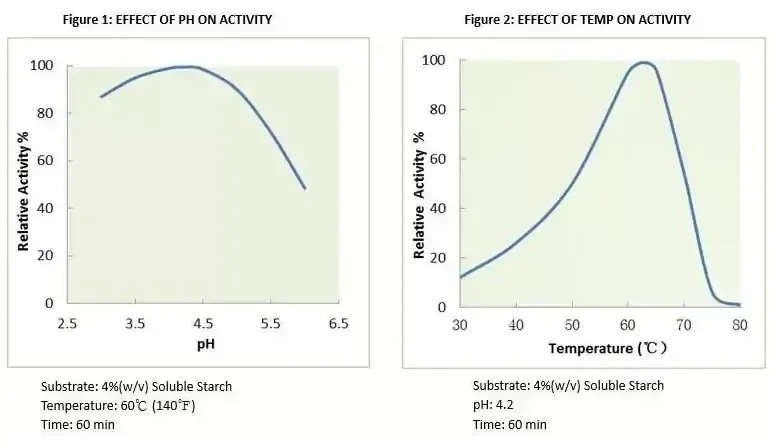
One of the key advantages of glucoamylase is its high specificity and catalytic efficiency. It can operate effectively across a wide range of pH levels, typically from 4.0 to 6.5, and demonstrates optimal activity at elevated temperatures, often between 55°C and 65°C. This thermal stability makes it particularly valuable in processes that require sustained enzymatic action under heated conditions. Additionally, many modern glucoamylase formulations, including those derived from Aspergillus niger or genetically modified strains, are designed to withstand industrial-level stressors, such as shear force and variable substrate concentrations. These enhancements contribute to consistent performance, reduced processing time, and improved yield, translating to cost savings and higher productivity for manufacturers.
About Us
Products
Send Inquiry


